Retiring From Real Estate? Start Planning Before Your Last Closing
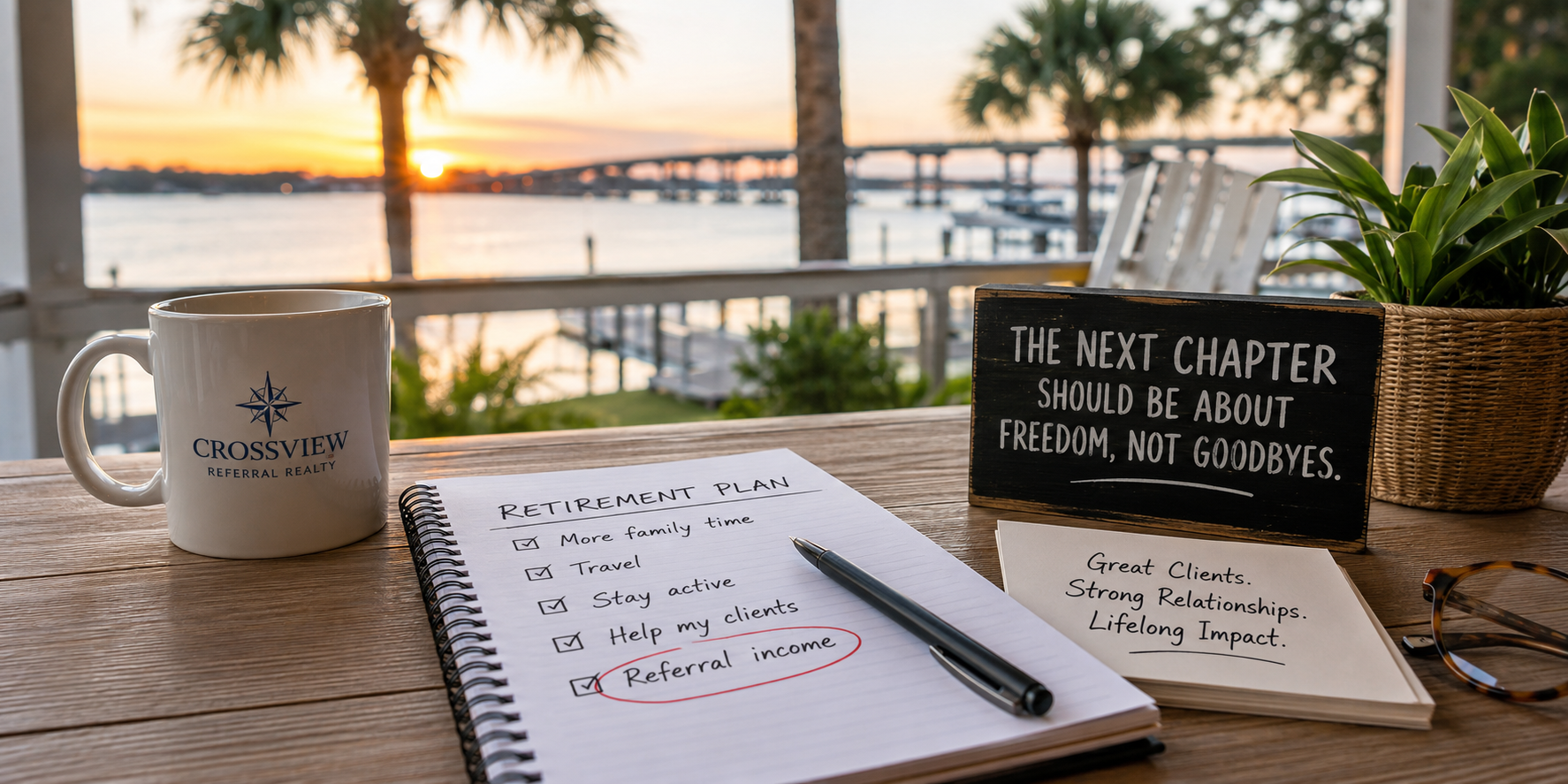
If you’re retiring from real estate in the next year or two, what happens to the business and relationships you spent years building?
You don’t necessarily have to walk away from all of it. By planning your transition early, keeping your Florida real estate license active, and moving to a referral-only brokerage when you’re ready, you can continue helping people in your network while another agent handles the actual transaction.
Retiring From Real Estate Doesn’t Have to Mean Starting Over
Retirement from real estate is a little different from retiring from a traditional job.
There usually isn’t a neat moment where you hand someone the keys, collect a check for the business you built, and head off into retirement. For a lot of individual agents, the real value of the business is much more personal than that.
It’s your past clients.
Your database.
The families you’ve helped through multiple moves.
The person who still texts you when their daughter is thinking about buying her first house.
The neighbor who gives your name to someone moving into town.
You spent years becoming the person people call when real estate comes up. That doesn’t automatically stop just because you don’t want to do another listing appointment, inspection, open house, or 9 p.m. contract negotiation.
And that’s why the best time to think about your transition may be before your last closing, not after it.
Give Yourself a One- to Two-Year Retirement Runway
If you already know you’d like to retire from active real estate within the next year or two, you have something valuable: time.
Use it.
You don’t need to make a big announcement tomorrow or completely change the way you work. But you can start getting your business ready for what comes next.
Take a good look at your database. Who are the people who regularly send business your way? Which past clients are likely to move again? Who has adult children buying homes, parents downsizing, investment properties, vacation homes, or connections in other states?
Then start reconnecting.
Not with a giant “I’m retiring!” email blast six months too early. Just normal conversations. Check in. Stay in touch. Make sure those relationships are still relationships and not simply names sitting in a CRM you haven’t opened in three years.
You’re gonna want that connection when your role changes.
Decide Who You Trust With the Clients You’ve Built
This is a big one.
When you’re no longer personally handling transactions, you need agents you feel comfortable referring people to.
And we wouldn’t wait until a past client calls unexpectedly and says, “Hey, we’re ready to sell. Can you come over tomorrow?”
Start paying attention now.
Who communicates well? Who follows through? Who treats clients the way you would want your clients treated? Who has the right experience for a particular market or type of transaction?
That doesn’t mean you need one person who gets every future referral.
In fact, one of the advantages of moving into a referral role is that you can choose the right agent for each situation. Your Jacksonville client moving to Tennessee may need one connection. Someone selling a condo in South Florida may need another.
You spent years earning your clients’ trust. You should be thoughtful about where that trust goes next.
Plan What You’ll Tell Your Past Clients
Agents sometimes make retirement sound more final than it needs to be.
“I’m retired. I don’t do real estate anymore.”
Okay. But then what happens six months later when that client’s sister needs an agent?
Instead, your message can be much simpler:
You’re retiring from actively listing and selling real estate, but you’re keeping your Florida real estate license active and staying connected to great agents. If someone in your network needs real estate help, they can still call you and you’ll help connect them with the right person.
That’s a very different message.
You’re setting a boundary around what you don’t want to do anymore while making it clear that the relationship doesn’t have to disappear.
We’ve covered this transition in more detail in our post, “What to Tell Past Clients When You Become a Referral Agent.” The important part is to start thinking about that conversation before you retire, not six months afterward when people have already started calling someone else.
Keep Your Florida Real Estate License Working After Retirement
This is where a referral-only brokerage can make sense.
Instead of letting your Florida real estate license lapse when you stop actively selling, you can move it to a brokerage built specifically for referrals.
You’re no longer taking listings, showing homes, negotiating contracts, or managing transactions. When an opportunity comes your way, you refer that person to an active agent who does the work.
If the transaction successfully closes and a referral fee has been agreed upon, you can earn referral income through your brokerage.
No guarantee that referrals will come in, of course. But if you have spent 10, 20, or 30 years building relationships, people may continue calling you long after you’ve stopped actively selling.
That’s worth thinking about before simply letting your license go.
We also cover the licensing side of that decision in “Before You Let Your Florida Real Estate License Lapse.”
How CrossView Referral Realty Supports Referral Agents
CrossView Referral Realty is built for Florida-licensed agents who are ready to leave active sales but aren’t ready to give up their license or their referral opportunities.
There are no CrossView fees, no production requirements, and you choose which agent receives your referral. Referrals can be made nationwide, and you can live anywhere as long as you maintain a Florida real estate license and stay current with your licensing requirements.
Simple. Because after years in active real estate, complicated is probably the last thing you need.
Retirement Can Be a Transition, Not a Hard Stop
If you’re retiring from real estate in the next year or two, you don’t have to make every decision today.
But start thinking about it.
Look at the relationships you’ve built. Reconnect with your database. Identify agents you trust. Think about how you want clients to reach you after retirement. And before you let your Florida real estate license lapse, understand what keeping it active could allow you to do.
You worked a long time to build that network.
Retirement can mean leaving the transactions behind without automatically leaving every future opportunity behind with them.
If you’d like to see how a referral-only brokerage could fit into your retirement plan, give CrossView Referral Realty a call at 904-503-0672 or visit CrossView Referral Realty. We’d love to help you understand your options.
Frequently Asked Questions
Q: Should I keep my real estate license after I retire?
A: If you hold a Florida real estate license and expect people in your network to continue asking you for real estate help, keeping it active may give you the option to earn referral income without continuing to work as an active sales agent. You’ll still need to meet Florida licensing and continuing education requirements.
Q: When should I start planning to retire from real estate?
A: If possible, start thinking about the transition a year or two before you plan to stop actively selling. That gives you time to reconnect with past clients, organize your database, identify agents you trust, and decide how you’ll explain your new role.
Q: Can I still receive referrals from past clients after retiring from real estate sales?
A: Yes. People who know and trust you may continue reaching out when they or someone they know needs an agent. With an active Florida real estate license held through the appropriate brokerage, those opportunities can potentially become professional referrals rather than conversations you simply have to turn away.
Q: Do I have to refer all of my clients to the same real estate agent?
A: Not with CrossView Referral Realty. You choose the receiving agent, which lets you find the person you believe is the best fit for each client, location, and situation.
Q: Can I live outside Florida and still join CrossView Referral Realty?
A: Yes. CrossView Referral Realty works with agents who hold a Florida real estate license, even if they now live outside Florida. You’ll need to keep that Florida license properly maintained and remain current on your continuing education requirements.
```